
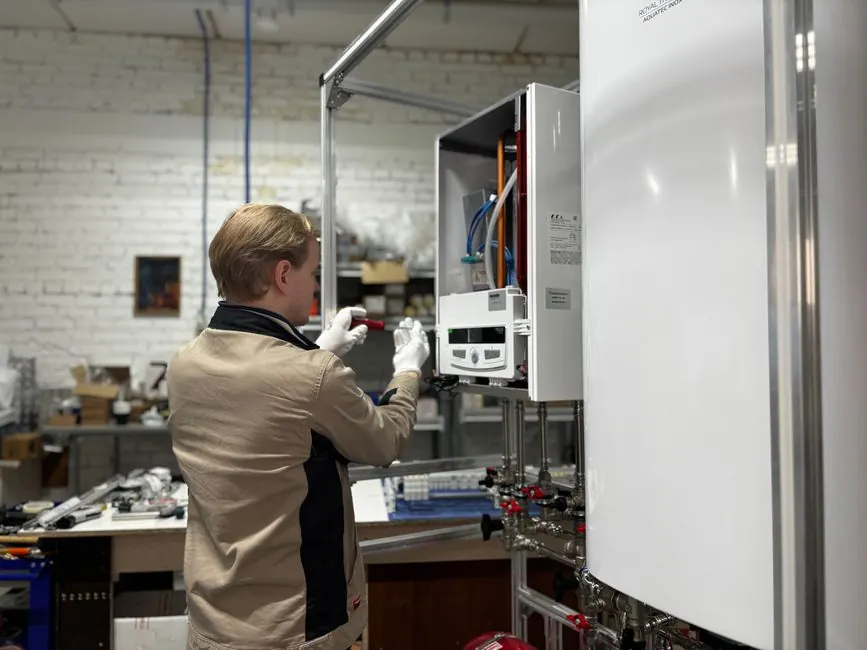
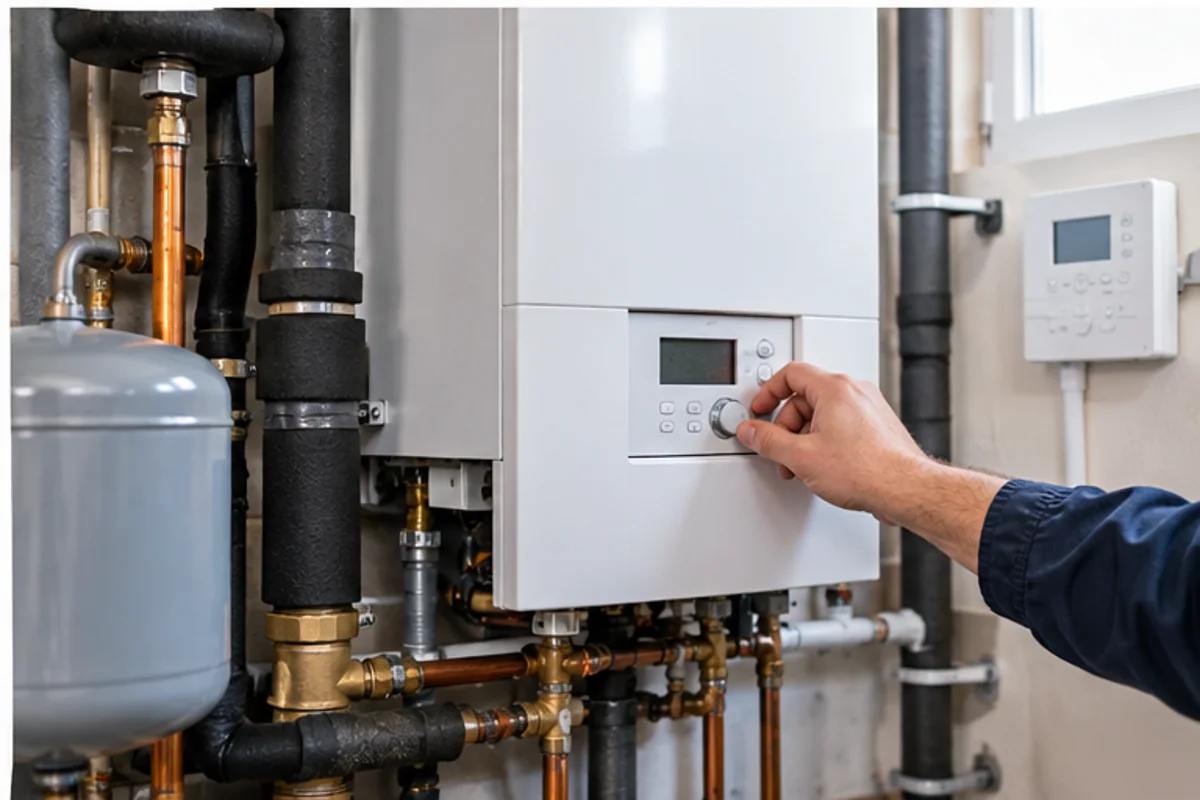
An annual boiler checklist makes heating maintenance easier to manage because it separates safe homeowner observations from work that belongs to a qualified professional. The goal is not to turn routine maintenance into a DIY repair project. It is to notice changes early, keep the equipment accessible, document performance, and schedule appropriate service before the boiler is under maximum winter demand.
Step 1: Record basic equipment information
Start by locating the boiler model and serial number, installation or replacement date if known, fuel type, and the most recent service invoice. Keep this information in a household maintenance file or a secure digital note. When you call for service, accurate model information can help a contractor anticipate parts, manuals, and diagnostic procedures.
Also record the thermostats and heating zones associated with the boiler. If the system provides domestic hot water, note whether it uses an indirect tank, combi arrangement, or another configuration. A simple system map is especially useful in multi-zone homes where a problem may affect only one floor or addition.
Step 2: Perform a safe visual inspection
With the boiler operating normally and without removing covers, look at the floor and visible piping for moisture, rust, mineral deposits, or staining. Check that stored items are not crowding the boiler, blocking vents, or touching hot piping. Make sure service panels and shutoffs remain accessible. If you see active leaking near electrical components, avoid the wet area and arrange professional help.
Look at the vent termination outdoors if it is safely accessible from ground level. Snow, leaves, nests, or other obstructions can interfere with some vent systems. Follow the boiler manufacturer's clearance requirements and do not modify vent piping yourself. Chimney-vented systems should be inspected according to the applicable equipment and venting requirements.
Step 3: Test thermostats and each heating zone
Create a heat call from each thermostat one at a time and confirm the expected zone responds. Listen for pumps or zone valves operating and walk through the rooms to check heat distribution. A zone that stays cold while others work can point to a control or circulation issue. A thermostat that does not respond may have battery, wiring, configuration, or equipment-side causes.
Review schedules and clock settings. Seasonal time changes, power interruptions, app updates, or household routine changes can leave a thermostat running an outdated schedule. Correcting controls is one of the simplest ways to avoid unnecessary heating without changing the boiler itself.
Step 4: Observe pressure and temperature behavior
If your boiler has homeowner-visible gauges, note readings when the system is cool and again during a normal heating cycle. You are looking for stability and consistency with manufacturer guidance, not trying to hit a generic internet number. Sudden changes, repeated low-pressure conditions, or excessive pressure movement should be evaluated.
Do not repeatedly add water or operate unfamiliar filling valves just to move a gauge. The system may be losing water for a reason, and adding fresh water can mask the fault. A technician can check expansion capacity, leaks, valves, and other causes of abnormal pressure.
Step 5: Check heat emitters and room comfort
Inspect radiators and baseboards for visible leaks, corrosion, blocked airflow, or cold sections. Keep furniture and heavy curtains from trapping heat. If a radiator gurgles or remains partly cold, note the symptom and the affected room. Do not assume every cold radiator needs bleeding; modern hydronic systems use different air-management methods.
Compare comfort between rooms at similar thermostat settings. Persistent imbalance can indicate distribution, insulation, air leakage, or control problems. Solving the imbalance can improve comfort without raising the boiler temperature or thermostat setting for the entire home.
Step 6: Arrange manufacturer-appropriate professional service
Professional boiler maintenance should match the fuel and boiler design. Typical work may include inspection of burners, ignition, flame sensing, heat exchangers, pumps, valves, safety controls, venting, condensate components, electrical connections, and combustion performance where applicable. Steam systems have additional water-level and control considerations; oil equipment has fuel-system and combustion-maintenance needs that differ from gas equipment.
Ask the service provider what was inspected, what measurements were taken, what parts were cleaned or replaced, and whether any conditions should be monitored. A clear service record is more useful than a generic sticker with only a date.
Step 7: Update the maintenance record after service
Save the final invoice, diagnostic notes, warranty information, and any recommended follow-up. Record unusual symptoms even if no repair was needed. Over several years, this history can reveal repeated pump failures, pressure loss, ignition faults, or other patterns that influence repair-versus-replacement decisions.
Set a reminder for the next pre-season check rather than waiting for the first cold day. A consistent annual routine is easier to budget for and gives you more flexibility when scheduling service.
When professional boiler service makes sense
Homeowners can safely handle basic visual checks, thermostat settings, and keeping the area around a boiler clear. Work involving gas, combustion, electrical components, pressure vessels, internal controls, or opening sealed boiler components should be left to a qualified heating professional. If you smell gas, suspect carbon monoxide, see active leaking near electrical components, or cannot safely keep the property warm, leave the unsafe area and follow local emergency guidance before arranging repair.
Related Medford boiler resources
Boiler maintenance and power flushing. Boiler leak and pressure repair. Boiler repair services.
Create a simple monthly observation routine
Between annual service visits, spend a few minutes each month during heating season observing the system from the outside. Check for new moisture, unusual sounds, error messages, or changes in room comfort. Confirm that stored items have not accumulated around the boiler and that thermostats still follow the intended schedule. These observations are not a substitute for maintenance; they are an early-warning system that can help you describe changes before they become disruptive.
Questions to ask at the annual service visit
Ask whether the boiler condition changed since the previous visit, whether any measured values are trending in the wrong direction, and whether a part is being recommended because it has failed or simply because of age. Request an explanation of any maintenance interval that applies to filters, strainers, condensate components, water treatment, or venting. If future work may be needed, ask what symptom would indicate that it should be scheduled sooner.
Use the checklist when buying or selling a home
A boiler maintenance record is useful during a property transaction because it gives buyers and sellers a clearer picture of heating-system history. A visual inspection cannot prove future reliability, but model information, service dates, invoices, and documented repairs are more useful than vague claims about equipment age or condition. If the system is unfamiliar, arrange an appropriate heating inspection and avoid relying only on a general home-inspection summary.
Make the next service visit more productive
Before an appointment, gather the boiler model and serial number, recent service records, photographs of any visible leak or error display, and a short timeline of the symptom. Note whether the issue happens only during very cold weather, only when one heating zone runs, or after the boiler has been operating for a particular length of time. If someone in the household changed thermostat schedules, valves, or other user controls recently, include that detail as well. Good observations help a technician reproduce intermittent problems and distinguish a boiler fault from a thermostat, distribution, or building-comfort issue.
After the visit, keep the written diagnosis and ask what normal operation should look like. If a repair was completed, note which part was changed and whether follow-up monitoring is recommended. If no fault was found, ask which symptoms would justify another call. Clear records make future maintenance easier and help homeowners make repair decisions based on the system's actual history rather than memory or assumptions.