
Cold weather puts a boiler under its longest sustained workload of the year. Preparing before temperatures drop gives you time to spot small problems, schedule service without the pressure of a no-heat emergency, and confirm that every part of the home warms as expected. This Medford-focused winter checklist explains what homeowners can inspect safely, what symptoms deserve professional attention, and how to organize your heating system for a more predictable season.
Start with a complete pre-season heating test
Turn the thermostat up enough to create a normal call for heat and let the system complete a full cycle. Walk through the home while it runs. Check whether each heating zone responds, whether radiators or baseboards warm in a reasonably even pattern, and whether the boiler shuts down normally when the thermostat is satisfied. A pre-season test is most useful when you do it before the first cold snap, because there is time to investigate a weak zone or delayed ignition without losing heat during severe weather.
Use your senses without opening the boiler cabinet. Listen for new banging, grinding, whistling, or repeated clicking. Look for water on the floor, rust streaks, mineral deposits, damp insulation, or discoloration around exposed piping. Smell matters too: a persistent burning odor, gas odor, or exhaust-like smell is not something to troubleshoot casually. Leave an unsafe area and follow utility or emergency guidance when gas or carbon monoxide may be involved.
Check boiler pressure and visible piping
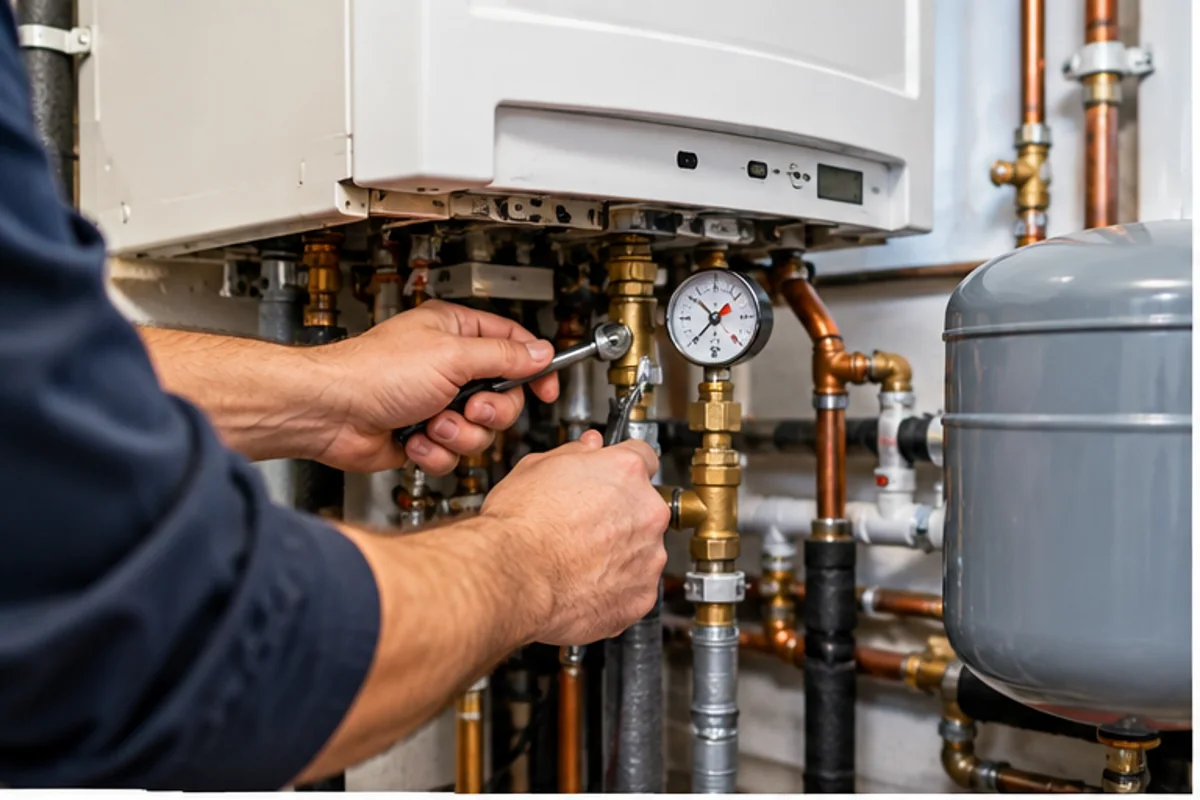
Many hot-water boilers have a pressure gauge that gives a useful snapshot of system conditions. The correct pressure depends on the boiler and building, so compare the reading with the manufacturer's instructions or previous service notes rather than relying on a universal number. What matters to a homeowner is unexpected change: pressure that repeatedly falls, rises sharply as the boiler heats, or behaves differently from last season deserves evaluation.
Inspect only visible, accessible piping. A small drip can leave white or green mineral residue before it becomes a puddle. Pay attention to valves, circulators, expansion-tank connections, relief-valve discharge piping, and joints near the boiler. Do not tighten fittings on a hot or pressurized system unless you are qualified to do so. Photographing a suspected leak over several days can help show whether it is active or old staining.
Prepare radiators, baseboards, and heating zones
The boiler can operate correctly while rooms remain uncomfortable because heat is not moving through the distribution system as intended. Make sure furniture, curtains, rugs, and storage are not blocking baseboard covers or radiators. If your home has thermostatic radiator valves, confirm they move freely and are not hidden behind heavy furnishings. For multi-zone systems, test each thermostat separately so you know which zone controls which rooms.
Air trapped in hydronic systems can contribute to gurgling and uneven heating, but bleeding procedures vary. Some systems have automatic air elimination and should not be treated like traditional radiators. If you are unsure how your system is designed, ask a heating professional before releasing water or pressure. The goal is to solve the cause of poor circulation rather than repeatedly treating the symptom.
Review thermostat and control settings
Replace thermostat batteries if applicable and confirm the displayed time and schedule are correct. A schedule left over from summer or a previous household routine can create apparent heating problems that are actually control issues. If you use smart thermostats, verify Wi-Fi connectivity and make sure any geofencing or energy-saving features match how the home is occupied during winter.
Avoid extreme setbacks that force the system to recover from a very low indoor temperature every morning. The best strategy depends on insulation, boiler type, outdoor conditions, and household comfort. Condensing boilers may benefit from professionally optimized water-temperature controls, but homeowners should not change combustion or installer-level settings simply to chase efficiency.
Keep the boiler area serviceable and safe
Clear boxes, paint, cleaning products, laundry, and other storage away from the boiler and its venting. Technicians need safe access to panels, valves, electrical disconnects, pumps, and nearby piping. Combustible clutter can also create avoidable risk. Never block combustion-air openings or vents. If the boiler uses sidewall venting, check the exterior termination periodically during snow and ice events and follow the manufacturer's clearance guidance.
Test smoke and carbon-monoxide alarms according to the alarm manufacturer's instructions and replace expired devices. Carbon monoxide is colorless and odorless, so an alarm is an essential safety layer for fuel-burning equipment. If an alarm activates, treat it as a safety event rather than a boiler troubleshooting prompt.
Schedule maintenance before peak demand
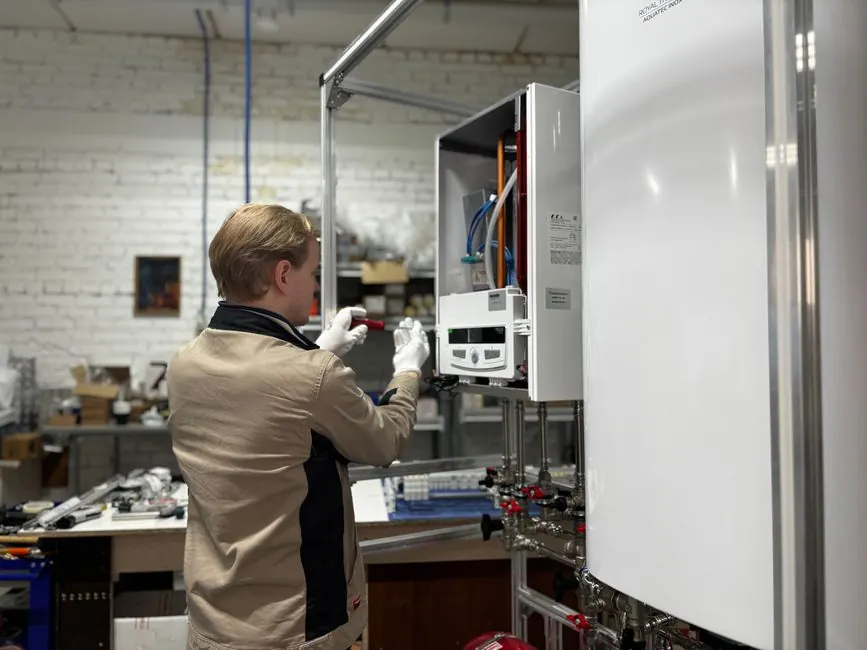
Professional maintenance is most convenient before the heating season becomes busy. The exact work depends on whether you have a gas, oil, steam, or hot-water boiler. Service may include inspection of safety controls, venting, burners, heat exchangers, pumps, valves, electrical connections, condensate components, and combustion performance where applicable. Ask what is included so you understand the scope rather than assuming every tune-up is identical.
Keep the invoice and technician notes with the boiler manual. Record the model, serial number, filter or strainer information if relevant, and any parts replaced. A consistent history helps future technicians identify recurring faults and can make warranty discussions easier.
When professional boiler service makes sense
Homeowners can safely handle basic visual checks, thermostat settings, and keeping the area around a boiler clear. Work involving gas, combustion, electrical components, pressure vessels, internal controls, or opening sealed boiler components should be left to a qualified heating professional. If you smell gas, suspect carbon monoxide, see active leaking near electrical components, or cannot safely keep the property warm, leave the unsafe area and follow local emergency guidance before arranging repair.
Related Medford boiler resources
Boiler maintenance and power flushing. Emergency boiler repair. Areas we serve.
Make a cold-weather response plan before you need it
Save the boiler model, service contact information, utility emergency number, and location of normal heating-system shutoffs where household members can find them. Decide what you will do if the home loses heat overnight or during a storm. Planning matters because frozen pipes can become a secondary problem when indoor temperatures fall for an extended period.
Pay attention after the first sustained cold spell
Some heating problems appear only when the system runs for long periods. After the first genuinely cold week, repeat your walk-through. Check whether the farthest rooms still heat, whether pressure remains stable, and whether any new noises or leaks appear. A boiler that seemed fine during a short fall test may reveal circulation or capacity issues under sustained demand.
Keep snow and ice from creating exterior problems
If your boiler vents through an exterior wall, know where the intake and exhaust terminate before winter. After significant snow, visually confirm from a safe location that drifting snow or ice has not blocked the termination. Do not chip, alter, extend, or cover vent components. If you are unsure about safe clearance or see icing that repeatedly returns, have the venting and combustion system evaluated professionally.
Make the next service visit more productive
Before an appointment, gather the boiler model and serial number, recent service records, photographs of any visible leak or error display, and a short timeline of the symptom. Note whether the issue happens only during very cold weather, only when one heating zone runs, or after the boiler has been operating for a particular length of time. If someone in the household changed thermostat schedules, valves, or other user controls recently, include that detail as well. Good observations help a technician reproduce intermittent problems and distinguish a boiler fault from a thermostat, distribution, or building-comfort issue.
After the visit, keep the written diagnosis and ask what normal operation should look like. If a repair was completed, note which part was changed and whether follow-up monitoring is recommended. If no fault was found, ask which symptoms would justify another call. Clear records make future maintenance easier and help homeowners make repair decisions based on the system's actual history rather than memory or assumptions.